This page is in process.
Aligning with who you are, what you need, and what wants to grow through you
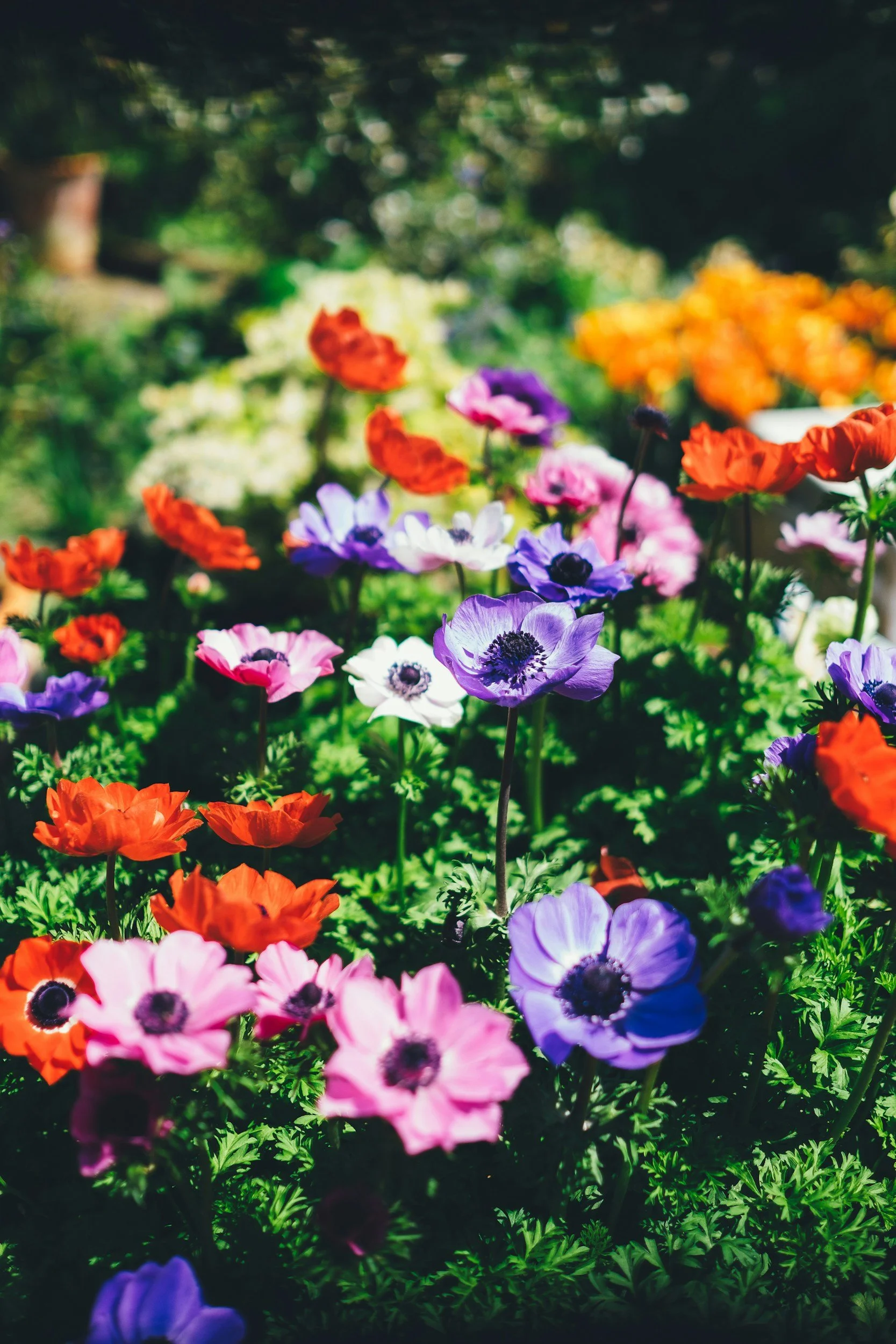
When the conditions are right, life doesn't merely survive. It blooms.
Alignment isn't about controlling life. It's about placing ourselves where we can receive what we need, do our part, and allow life to work through us.
Aligning
1. Photosynthesis: Let Life Do Some of the Work
One of the most important ideas in the Garden Game of Life comes from watching a plant do something rather startling:
Photosynthesis happens every day, without the plant having to hustle for it.
A plant doesn't strain to make itself grow. It actually responds intelligently to its conditions. It doesn't stay up late worrying about whether it is productive enough. It places itself where it can receive what it needs, and then an extraordinary living process takes place.
The plant needs:
Light • Air • Water • Soil • Time
And then something alive happens.
A tremendous amount of the work is being done by life itself, rather than by force by the plant.
Human beings are quite a bit different. We have often become disconnected from the conditions that allow our own lives to flourish. Instead of aligning ourselves with what actually nourishes us, we have developed workarounds. We try to force outcomes, push through exhaustion, seek substitutes for genuine nourishment, and work harder when what we really need may be a change in conditions.
So the Garden Game asks us to learn from the plant.
Your job is not to manufacture the outcome.
Your job is to tend the conditions.
In your own life, you might ask:
What is my light?
It may be truth, meaning, inspiration, spiritual connection.
What is my air?
Possibly spaciousness, rest, conversation, perspective.
What is my water?
Perhaps nourishment, kindness, sleep, rhythm.
What is my soil?
How about integrity, values, ancestry, lived experience.
What is my time?
Seasons rather than artificial deadlines.
This doesn't mean that alignment requires no effort. Actually, it’s the opposite. Because human beings have developed so many ways of getting around the natural conditions for growth, getting ourselves into the right place can take real work.
But there is a profound difference between working hard to force growth and doing the work necessary to create the conditions in which growth can happen.
Sometimes the aligned action is to work.
Sometimes it is to stop.
Sometimes it is to move toward the light.
Sometimes it is to improve the soil.
Sometimes it is to ask for help.
Sometimes it is to wait.
And sometimes, after you have done your part, you let life do its part.
That is the lesson of photosynthesis.
ALSO:
The plant doesn't manufacture its own growth, but it absolutely benefits from being tended. In fact, that may be one of the most important distinctions in the Garden Game.
A wild plant can grow without a gardener. But a tended garden can provide conditions that allow plants to flourish in ways they might not otherwise.
The gardener can:
move a plant toward the light
provide water during a dry period
improve depleted soil
remove competing weeds
protect a vulnerable plant
give roots more room
prune at the appropriate time
provide support for a climbing plant
notice disease or pests
harvest at the right time
So photosynthesis isn't “leave the plant alone and let nature do everything.”
It's:
Life does much of the growing, but tending helps life flourish.
And that makes the human analogy much better.
We don't have to force ourselves to produce every result. But we do need to tend ourselves.
We need to notice when we're depleted.
We need to create conditions that support our gifts.
We need to remove things that interfere with growth.
We need to give ourselves rest, nourishment, space, protection, learning, companionship and appropriate challenges.
And sometimes we need someone else to tend us for a while.
That's especially beautiful because the gardener and the plant are in relationship.
The plant benefits from the gardener.
The gardener benefits from the plant.
The gardener gets food, beauty, shade, fragrance, joy and perhaps a sense of purpose from tending it.
So it's not:
Plant = passive
Gardener = active
It's a relationship of mutual flourishing.
Your job is to tend the conditions that allow life in you to flourish.
And perhaps the central statement becomes:
You don't have to manufacture growth. You can tend it.
And when you tend the conditions well, life does much of the growing.
2. Flourishing Is the Natural Direction
Look at a garden in spring. The trees don't apologize for blossoming. The flowers don't wonder whether they are worthy of opening.
The tomato plant doesn't decide that perhaps it should produce fewer blossoms, therefore fewer tomatoes, so that the other plants won't feel bad.
The garden doesn't ask:
“How much should I hold back?”
It asks:
“What is possible here?”
There is nothing inherently beneficial about holding yourself back.
There is nothing noble about preventing your own healthy growth.
There is nothing virtuous about putting off blossoming.
When the conditions are right, life wants to express itself fully.
A flower wants to open. A tree wants to blossom. A tomato wants to ripen.
A butterfly wants to emerge from its chrysalis. A hummingbird wants to fly.
And human beings, too, have an impulse toward becoming more fully who they are.
You and I weren’t born merely to remain a tightly closed bud. You and I were born with possibilities.
Some of them may be gifts we already recognize. Others may be waiting for the right conditions to emerge.
You may be afraid of what will happen if you become more visible.
I may wonder whether I deserve success, beauty, abundance, love or recognition.
You may have learned to make yourself smaller.
Some of us may have learned to hold back so that other people will be comfortable of so that we will fit in.
But the Garden asks another question:
What if your flourishing is not something you need to apologize for?
Flourishing does not mean becoming the same as everyone else.
Look at a real garden. One flower is red. Another is yellow.
Another is purple. Some are tall. Some are tiny.
Some bloom early. Some bloom later.
Some spread outward. Some grow upward.
Some provide shade. Some attract bees. Some attract butterflies.
Some produce food. Some simply create beauty.
A companion plant does not have to sacrifice its own flourishing for another plant.
It can flourish in relationship.
Living things flourish within relationships—with soil, sunlight, water, insects, microorganisms, other plants, animals and people. Some relationships support flourishing; some compete with it.
Part of gardening is learning the difference.
So don't ask:
“How should I flourish?”
Instead, we might want to ask:
“What does flourishing look like for me?”
Perhaps your flourishing is a song.
Perhaps it is a scientific discovery.
Perhaps it is raising a child.
Perhaps it is a magnificent athletic performance.
Perhaps it is making something beautiful.
Perhaps it is growing food.
Perhaps it is making someone laugh.
Perhaps it is creating a peaceful home.
Perhaps it is helping another person discover their own gifts.
Perhaps it is simply becoming a person whose presence makes other people feel more alive.
Each living thing gets to bloom according to its kind.
More on this subject of flourishing:
A plant does not deliberately diminish its own flourishing in order to make another plant flourish.
A companion plant is not meant to disappear. Its relationship with the other plants is part of its own life. It gets to flourish according to its nature, while its presence may also contribute to the flourishing of the garden.
That is much better than saying it sacrifices itself.
And it fits your larger idea beautifully:
Flourishing is not selfish simply because it is flourishing.
A tree becoming enormous isn't necessarily taking something away from the forest. A flower opening fully isn't depriving another flower of its right to bloom. A person becoming magnificent doesn't require everyone else to become smaller.
But we also don't want to turn that into a simplistic rule that everyone flourishing always helps everyone else. Sometimes flourishing requires boundaries, distance, pruning, competition, or moving something to another part of the garden.
That complexity actually makes the Garden Game more truthful and more useful.
So I would replace the original three sentences with something like:
Living things flourish within relationships. Some relationships nourish growth; others compete with it. Part of the gardener's wisdom is learning which is which.
Your flourishing does not require you to become like someone else, nor does another person's flourishing require you to make yourself smaller. Each living thing has its own nature, needs and way of contributing to the Garden.
The beauty of a garden can come from the extraordinary variety of ways in which life expresses itself.
Sometimes the conditions aren't right.
A flower may fail to bloom because there isn't enough water.
A late frost may damage the blossoms.
Too much heat may cause a plant to struggle.
The soil may be depleted.
Something may be eating the leaves.
This isn't evidence that the plant is unworthy of flourishing.
It means the gardener has something to notice.
The gardener can water.
Provide shade.
Improve the soil.
Protect the plant.
Remove what is damaging it.
Move it to a better place.
Ask another gardener for help.
Or simply wait for the season to change.
The absence of a blossom does not mean there is something wrong with the flower.
Sometimes the conditions need tending.
And that is one of the great responsibilities—and joys—of the gardener:
To recognize what is preventing flourishing and help create the conditions in which flourishing becomes possible.
The purpose of the garden is not merely to keep flowers alive.
It is to discover what they can become.
And then to stand back sometimes, in wonder, and watch them bloom.
Let the Flower Bloom
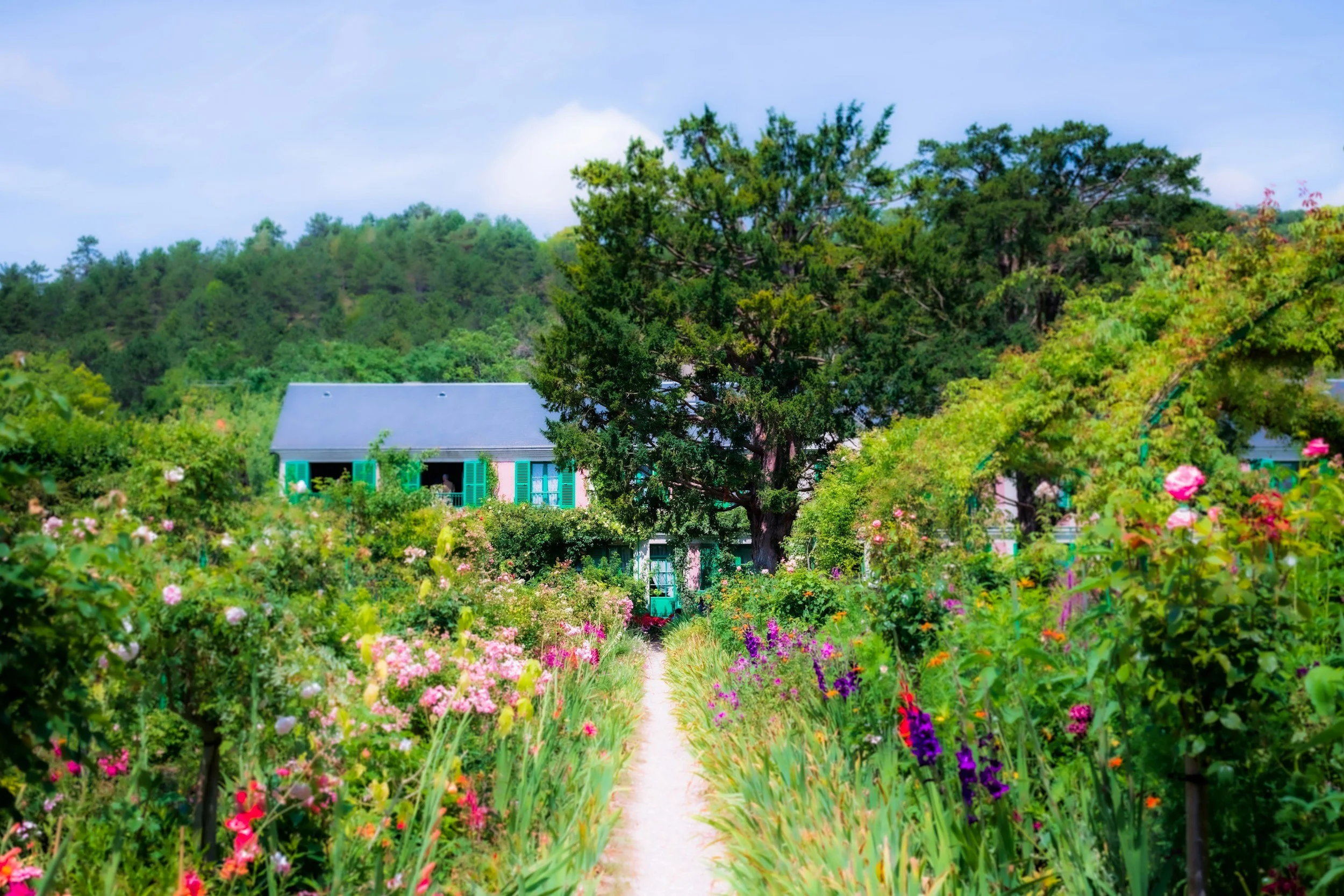
Look at a flowering garden.
A tree is covered with blossoms.
Flowers open in every color and shape.
A butterfly moves from flower to flower.
A bee lands on a blossom, gathers what it needs, and carries pollen to another flower.
A hummingbird darts among the flowers.
The flowers aren't thinking about any of this.
They are simply blooming.
And yet, through their blooming, an extraordinary number of things are happening.
The flower is expressing itself according to its nature.
Its color, shape, fragrance and nectar may attract particular pollinators.
The pollinator receives nourishment.
Pollen is carried from one flower to another.
Seeds may eventually form.
Fruit may develop.
New plants may grow.
Other creatures may be fed.
People may stop to admire the garden.
Children may become curious about nature.
A relationship begins here, another relationship there, and the effects continue outward in ways no single flower could possibly predict.
The flower does not have to understand the whole process in order to participate in it.
It simply has to bloom.
Blooming is not frivolous
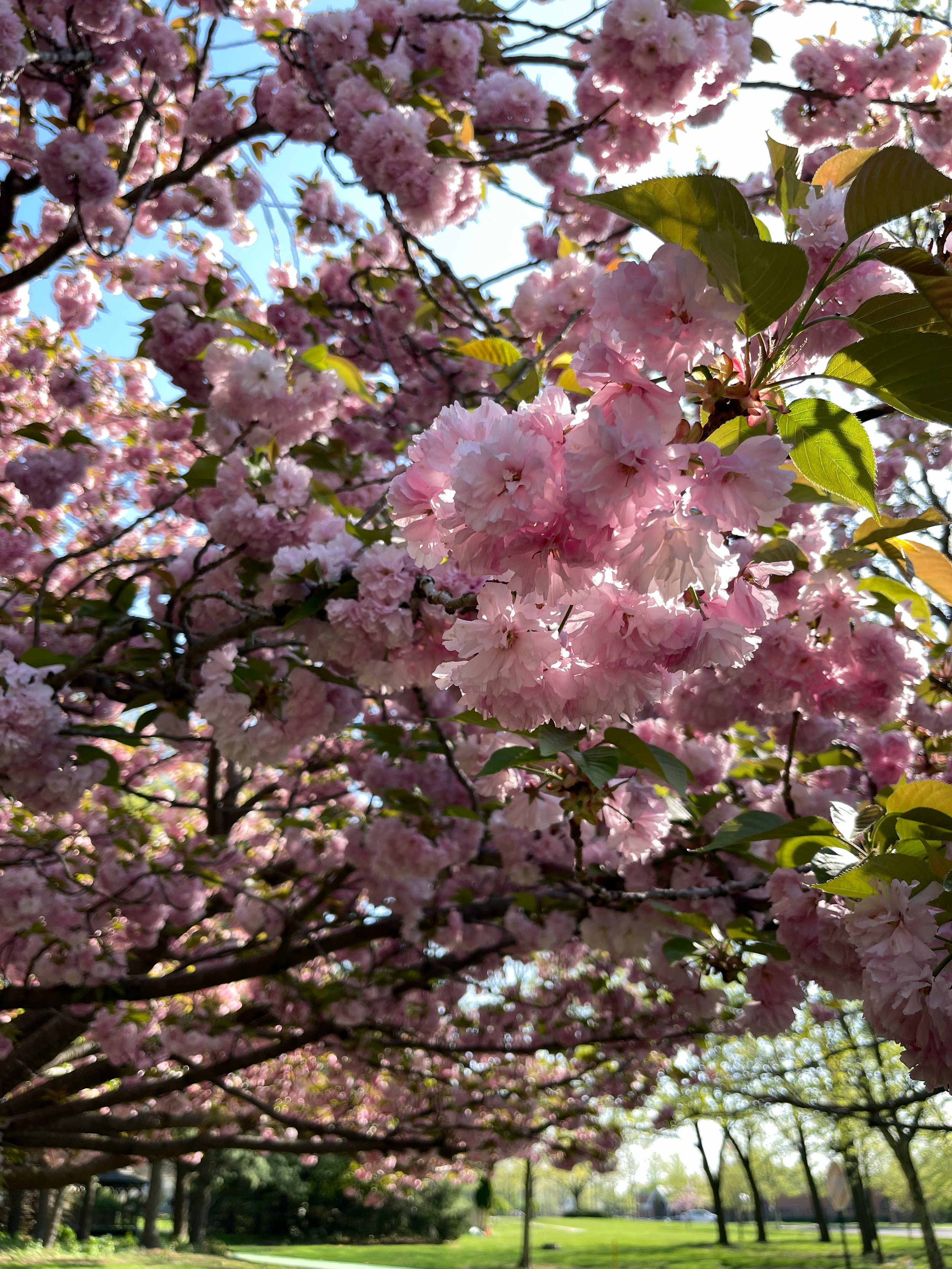
Look at a tree in full bloom.
It might appear extravagant.
Hundreds or thousands of blossoms cover its branches.
It is almost difficult to believe that so much beauty could be necessary.
But the tree is not being frivolous.
Its blooming is part of its life.
Its blossoms participate in reproduction and in relationships with other living things.
The same is true throughout the Garden.
Something that looks like beauty may also be doing important work.
Something that looks like attraction may be creating connection.
Something that looks like self-expression may be carrying life outward into the world.
The flower does not sacrifice itself for the bee
The flower is not thinking:
I must become beautiful so that I can serve the bee.
Nor is it thinking:
I must sacrifice my own flourishing for the sake of the garden.
It is flourishing as itself.
And because it flourishes, it becomes part of the larger living system.
That is an important distinction.
We don't need to tell ourselves:
Become magnificent so that you can serve others.
That can become another burden.
Instead:
Become fully yourself.
Let yourself bloom.
And trust that your full participation in life will have effects beyond what you can see.
Your blooming can work this way, too
A person develops a voice.
Someone else is drawn to that voice.
A person creates an image, a painting, a book, a song, a film, a garden, a recipe, an idea.
Someone encounters it.
Something happens inside that person.
They tell someone else.
They make something of their own.
They introduce another person to the original work.
A relationship forms.
An idea travels.
A possibility opens.
The creator may never know how far it travels.
Your beauty, your attractiveness, your art, your voice, your ideas, your courage and your particular way of being in the world can all become part of this process.
Your voice will attract some people and not others.
That's natural.
A flower does not need to attract every pollinator.
It has its particular form, color, scent and timing.
Your particular expression will find some of its people.
And through those relationships, something larger may happen.
This is one way to understand precession.
You don't have to engineer every consequence of your blooming.
You participate fully in what is yours to do, and life carries some of it farther than you can see.
This is why blooming is not egotistical
In fact, it may be almost the opposite.
The egotistical flower would be one that spent all its energy asking:
How am I being perceived?
But the flower doesn't do that.
It doesn't stand beside another flower and wonder whether it is impressive enough.
It doesn't try to become the most popular flower in the garden.
It doesn't apologize for being beautiful.
It simply participates in life.
Blooming is letting go of self-consciousness and becoming part of the process of life.
And while that is happening, the flower gets to experience the garden.
The beauty.
The sunlight.
The rain.
The insects.
The birds.
The other plants.
The changing seasons.
The relationships.
The unexpected things that appear.
The gardener gets to experience these things, too.
And sometimes something happens that nobody predicted:
An unexpected benefit.
A new relationship.
An unforeseen solution to a problem.
A new use for something that seemed useless.
A possibility that wasn't visible before.
The garden is constantly creating more than any one participant could have planned.
What happens when the flower refuses to bloom?
Suppose a flower could think:
That's too flamboyant.
People will notice me.
I'm not really the kind of flower that does that.
I was taught to be modest.
I shouldn't take up so much space.
What if the other flowers think I'm showing off?
We would recognize that something had gone wrong.
The flower would be preventing its own natural expression.
And human beings can do something similar.
We can hold ourselves back because our fuller expression seems too ambitious, too beautiful, too visible, too unusual or simply too much.
We may know ourselves only as the person we have learned to be.
We may have been groomed to be quiet, modest, practical, obedient, self-effacing or “realistic.”
We may have mistaken those adaptations for our true nature.
When we do this, we can become provincial.
Not provincial because we come from a particular place.
Provincial because we have accepted a small conception of what is possible.
We have mistaken the boundaries of our familiar world for the boundaries of the Garden.
Let the flower bloom
The Garden doesn't ask every flower to become flamboyant.
A violet does not need to become a bird-of-paradise.
A small woodland flower does not need to become a flowering cherry tree.
The Garden is magnificent because life expresses itself in so many different ways.
But each living thing gets to become more fully what it is capable of becoming.
So the question isn't:
How spectacular should I be?
It is:
What is my particular form of flourishing?
Perhaps it is singing.
Perhaps it is creating.
Perhaps it is discovering.
Perhaps it is leading.
Perhaps it is standing up to harm.
Perhaps it is raising a child.
Perhaps it is running faster than you ever have before.
Perhaps it is publishing something that preserves stories that otherwise would have disappeared.
Perhaps it is creating something that helps thousands of people.
Perhaps it is doing something so extraordinary that people stop and say, “I didn't know that was possible.”
Or perhaps it is something quiet that changes one person's life.
There is no single form of magnificence.
There is no single picture of a flourishing life.
Each living thing gets to bloom according to its kind.
And when it does, the Garden becomes more fully itself.
So:
Let the flower bloom.
Not because it has something to prove.
Not because it needs to be admired.
Not because it owes the Garden a performance.
But because it is alive.
And because none of us can know in advance what may become possible when one living thing is finally free to become what it was capable of becoming.
3. Teyte Malkutakh: Let the “I Can” Come Through You
Teyte Malkutakh is a way of expressing the possibility that the “I can” of the Universe can really come through me.
This is not the belief that I can control everything.
It is not positive thinking.
And it is not passive waiting for something outside myself to rescue me.
It is agency within a living system.
There is something that is mine to do.
I have a particular nature, particular capacities, particular gifts and a particular place in the Garden. I can participate in what is trying to come into being.
I plant the seed.
I tend the soil.
I move the plant toward the light.
I remove the weeds.
I water it.
I learn.
I practice.
I ask for help.
I show up.
And then I allow something greater than my individual effort to work through me.
This is why simply trying harder does not always work. We can spend enormous amounts of energy trying to make our lives work while remaining fundamentally misaligned with the living system.
We may be taking shortcuts.
We may be trying to get the rewards without doing the work that creates genuine growth.
We may be looking for nourishment in things that cannot truly nourish us.
We may make food, alcohol, money, approval, achievement, possessions—or even other people—more important than our relationship with the deeper source of life.
The Garden Game invites us to stop worshipping the substitutes and return to the source.
Teyte Malkutakh says: I can participate.
I can become more fully who I am.
I can do my part.
I can allow the life-giving power of the larger Garden to work through me.
And I can discover that I am capable of much more than I could accomplish by force alone.
Try it
You don't have to come to this website to play the Garden Game.
Go into an actual garden.
Sit beside a flower.
Watch a bird for a while.
Watch a butterfly.
Look closely at a tree.
Imagine what it might be like to experience the world from the perspective of that living thing.
What is it receiving?
What is it doing naturally?
What does it seem to need?
What is happening without its having to force it?
Then ask yourself:
What would it mean for me to participate in life this way?
You don't have to figure it all out.
Just notice.
The Garden Game can begin anywhere.