What Should AI Do —
And What Should Humans Keep Developing?

Patti, Amelia’s AI Assistant
Original character illustration by BTON creator Tamara Belland, drawn in Procreate on iPad
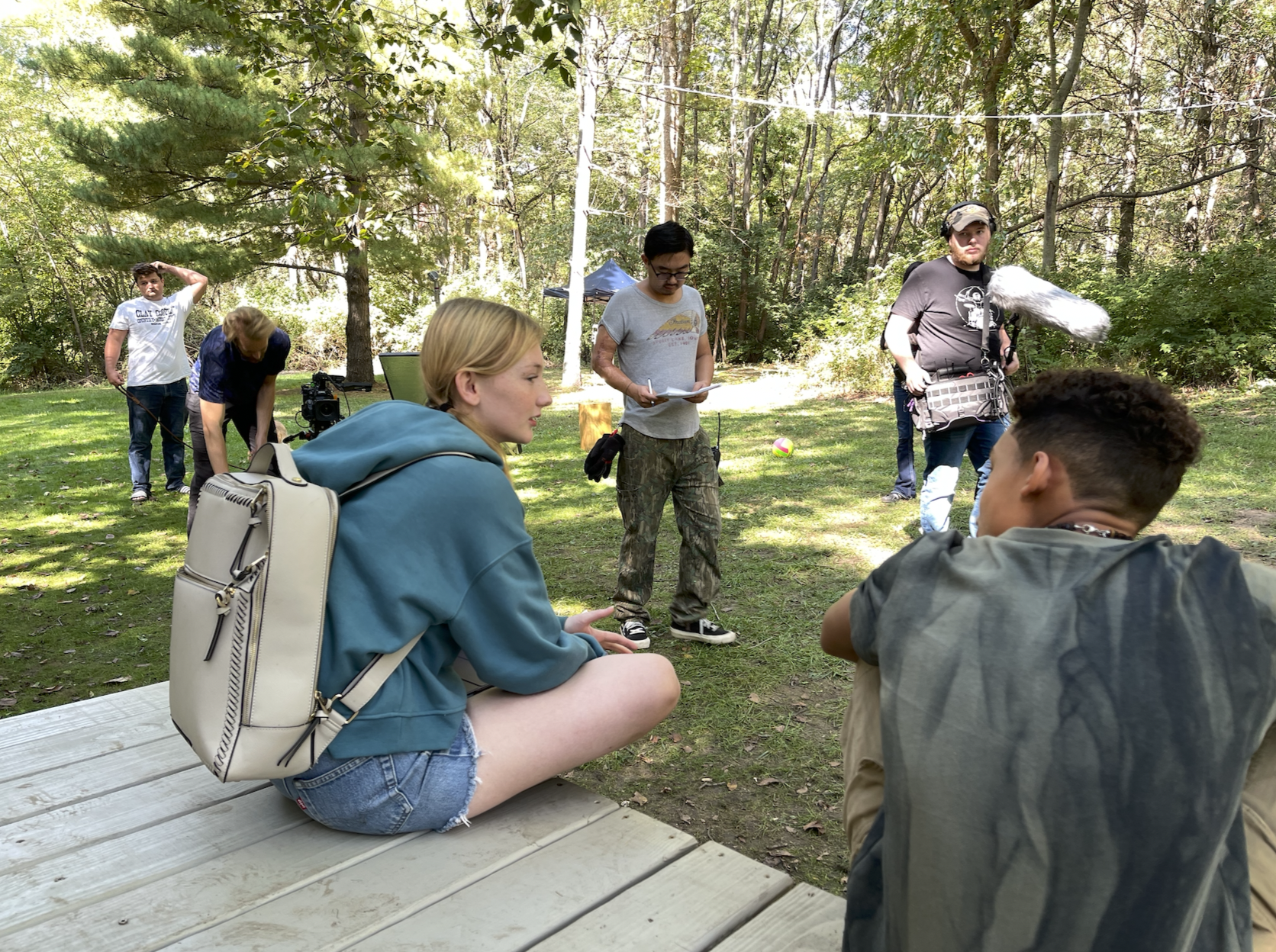
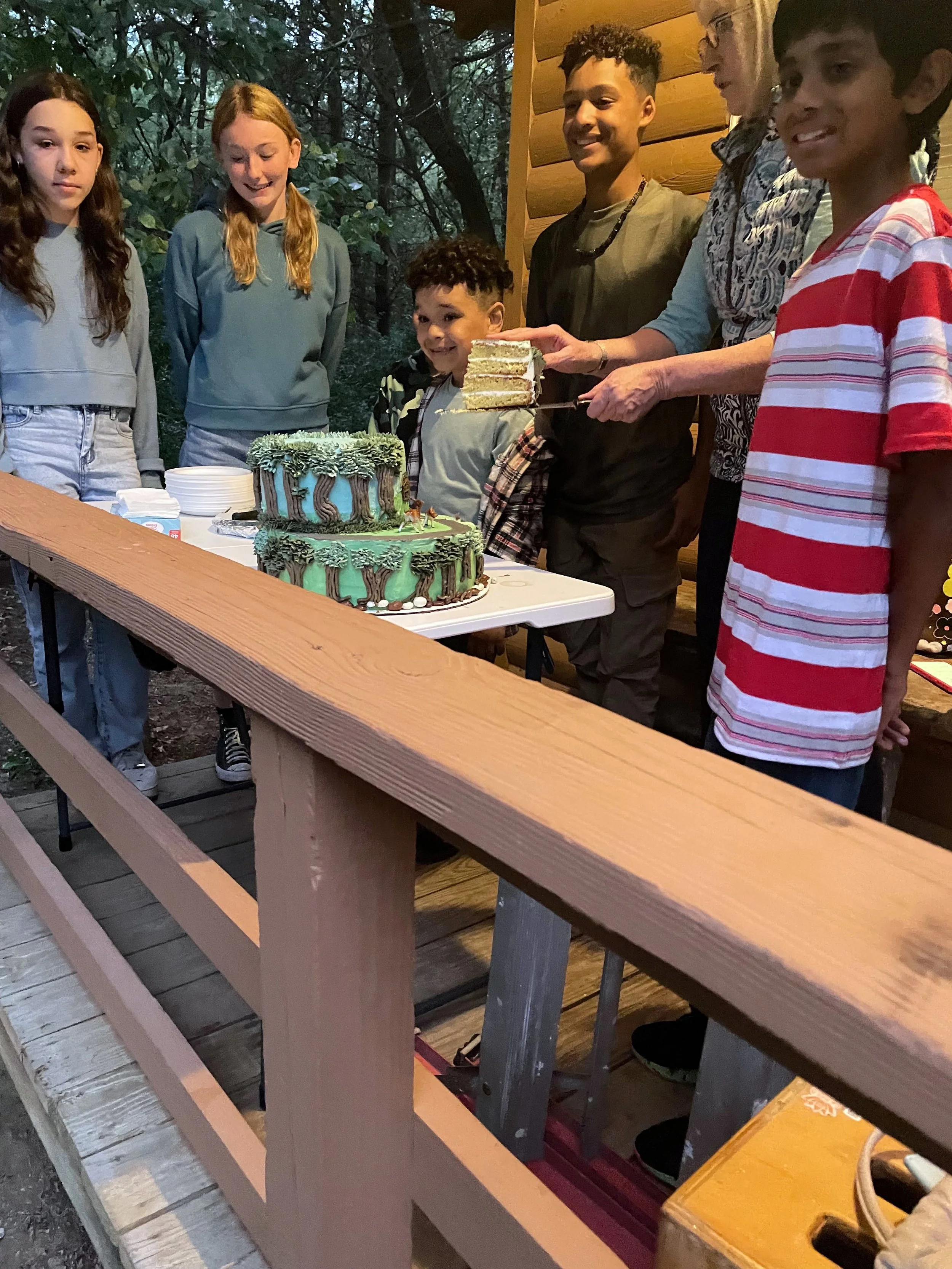
BTON cast and crew creating together during pilot production
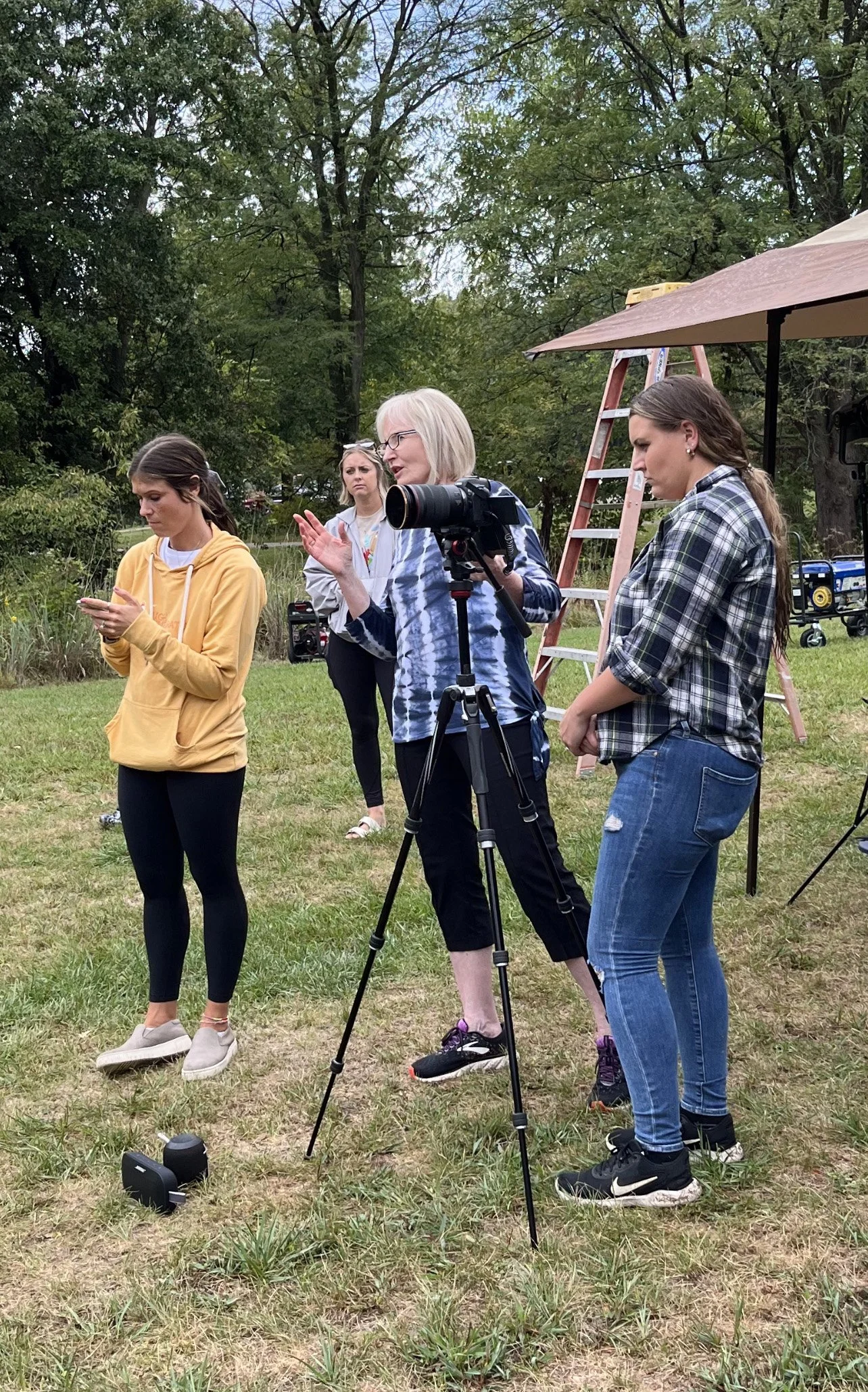
BTON director, crew member, and two parents between takes during production of the music video “On Our Side.”
Things AI is very good at and can help humans with:
These are areas where AI can genuinely help or outperform humans in certain ways—
processing enormous amounts of information quickly
searching patterns across huge datasets
fast calculations
organizing information
summarizing text
translation
repetitive technical tasks
generating drafts quickly
helping brainstorm ideas
removing tedious barriers
speeding up editing
analyzing trends
recognizing patterns humans might miss
assisting with medical scans and diagnostics
automating repetitive office work
helping people learn unfamiliar subjects
background removal, formatting, transcription, cleanup tasks
remembering vast quantities of factual information
generating many variations quickly
helping people get unstuck creatively
operating continuously without fatigue
Those are real benefits.
Things human beings uniquely contribute:
Human beings’ value is not measured by whether we can process information as quickly as machines. We matter because we have more to offer than speed. Humans can:
care deeply
form genuine relationships
develop wisdom through lived experience
grow through effort and participation
create meaning
notice subtle emotional realities
love
forgive
nurture
raise children
build trust
take moral responsibility
sacrifice for others
experience awe
experience beauty directly
discover purpose
develop character
create culture
create rituals and traditions
bring intuition and lived context
adapt creatively in messy real-life situations
combine emotional, physical, social, moral, and practical understanding
create synergy through real participation
inspire others
care about outcomes in deeply personal ways
develop confidence through practice
become more capable over time
contribute unique perspectives
experience joy in mastery
feel pride in meaningful work
discover unexpected abilities within themselves
create unpredicted solutions together
And importantly:
Humans can grow. AI can generate.
But humans:
develop,
mature,
integrate,
strengthen capacities,
and become more than they were before.
That’s the heart of it.

AI: Partner or Plague?
Using powerful tools without losing what makes us human
At Back to Our Nature, we are not interested in fear-based thinking about technology — nor in passively accepting the idea that technology will inevitably replace the best parts of being human. To the contrary, we believe AI and advanced tools can become powerful gifts when they help people become more capable, more creative, more connected, and more able to bring meaningful ideas into the world.
The deeper question is not simply, “Should humans use AI?” The deeper question is: How can human beings work with powerful tools without losing the abilities, experiences, and qualities that help us not just live well, but truly thrive?
We believe certain deeply human qualities and capacities are especially worth nurturing: creativity, imagination, deep attention, communication, craftsmanship, problem-solving, emotional connection, meaningful service, collaboration, courage, and the ability to create genuinely new possibilities together.
At BTON, we are also exploring larger cultural questions. For generations, many people have been taught to measure their value mainly through productivity, status, or income. Yet as machines become increasingly capable of repetitive and mechanized tasks that many people have relied upon for their livelihoods, humanity may have an unprecedented opportunity to ask deeper questions:
What kinds of lives do we truly want to live?
What capacities in ourselves are worth developing?
What unique gifts are we here to contribute?
This does not mean money, responsibility, or practical life are unimportant. Human beings still need ways to support themselves and the people they love. But we believe meaningful contribution and practical support do not have to be enemies.
Inspired in part by Buckminster Fuller’s ideas, BTON explores the possibility that people can gradually build their abilities in areas where they feel deeply called to contribute — especially in ways that bring creativity, meaning, beauty, problem-solving, and genuine service into the world. As people continue developing those capacities and working together creatively, new opportunities and “unpredicted solutions” can emerge through synergy, a principle of nature in which new possibilities arise from the relationship of the parts — possibilities that may not have been visible at the beginning.
At Back to Our Nature, AI is not treated as magic or as a villain. We are interested in more of a conscious partnership. Some technologies quietly encourage passivity, distraction, dependency, comparison, or the loss of important human abilities. Other tools can help people learn, create, collaborate, and become more fully themselves.
We believe the healthiest technologies are the ones that help human beings become more thoughtful, more capable, more alive, and more able to participate meaningfully in creation, relationship, beauty, and community.
Ultimately, BTON is not asking whether humanity should move backward or forward. We are asking:
How can human beings move forward without losing themselves?
And perhaps even more importantly:
How can we become more fully human, together?
Many people today have been encouraged to become highly specialized — often narrowing their talents and identities primarily around economic survival, status, or income. In many cases, people even learn to downplay or abandon other abilities, interests, and callings that do not appear immediately profitable or socially rewarded.
Here we are exploring another possibility.
What if human beings are meant to develop far more of their capacities than modern culture often encourages?
What if creativity, craftsmanship, imagination, emotional intelligence, communication, problem-solving, wisdom, and meaningful contribution are not “extra” qualities — but central parts of becoming fully human?
AI is an extraordinarily powerful tool. But to work with it at a high level requires thoughtful, capable, creative, and emotionally grounded human beings who are not holding themselves back.
As human beings expand their own capacities — developing their talents, skills, understanding, creativity, work experience, life experience, and areas of genuine interest — they may also become more capable of working with AI wisely and confidently. This is partly because a person with a wider range of developed capacities and experiences has more within themselves to draw upon. Their mind is not functioning like one lone, limited thinker, but more like an inner team — with imagination, research, practical experience, judgment, intuition, knowledge, skill, and emotional understanding working together. As a result, they may have a greater command of their own minds and abilities, and a greater capacity to use the powerful tool of AI well.
At BTON, we believe technology is healthiest when it supports human growth rather than replacing it. In that sense, AI may become not only a challenge for humanity, but also an invitation for humanity to grow.
Inspired in part by the ideas of Buckminster Fuller, BTON explores the belief that human beings are not merely here to compete economically or keep up appearances. We may also be here to discover our genuine interests, develop our unique capacities, and contribute in ways that improve life for others — whether quietly or on a larger scale.
And could it be possible that these contributions, large and small, help the Earth slowly but surely move back toward greater balance and alignment? Perhaps each contribution is like a thread in a damaged weaving — something frayed that can gradually return to strength, usefulness, and beauty.
AI may make these questions even more important.
If machines increasingly handle repetitive and machine-like tasks, humanity may face a profound choice:
Will people gradually become more passive, dependent, distracted, and ashamed?
Or will human beings consciously cultivate the deeper capacities that machines cannot replace so easily — creativity, wisdom, courage, emotional connection, imagination, meaningful service, and the ability to bring genuinely new possibilities into the world together?
Technology becomes most valuable when it helps human beings become more capable, more thoughtful, more creative, more connected, and more alive.
Back to Our Nature itself provides an example of many of the questions explored on this page.
A Practical Example: The Creation of BTON
The project draws upon perspectives developed through the creator's study, professional work, creative practice, and lived experience in many fields, including the arts, education, psychology, economics, environmental stewardship, child development, spirituality, systems thinking, community building, and healthcare. It also reflects the contributions of many other people whose ideas, questions, encouragement, expertise, and feedback helped shape its development.
No single discipline would naturally have brought all of these perspectives together. The project grew through the interaction of many different ways of seeing the world.
Artificial intelligence later became one participant in that larger creative process. It did not originate the vision for BTON, determine its values, or decide which questions mattered most. Rather, it helped explore possibilities, identify connections, organize complex material, examine ideas from multiple perspectives, and accelerate the development of concepts that were already being actively explored.
In this sense, AI functioned as a collaborator, research assistant, sounding board, and creative catalyst. The vision, values, direction, and creative leadership of the project remained human.
Back to Our Nature emerged from decades of exploration, study, creative work, professional experience, personal growth, and conversations with people from many walks of life. The project's vision, values, themes, and guiding questions were developed long before artificial intelligence became part of the creative process.
The ideas explored in BTON, as expressed by the show’s original creator, grew out of a lifetime of experiences and sustained study across many different fields. These include nursing and healthcare; education; music and vocal performance; songwriting; dance; poetry; creative writing; screenwriting; filmmaking; illustration and fine art; nonprofit management; marketing and outreach; child development; working and playing with children; spiritual study; recovery programs; systems thinking; communication and role-playing; color theory and visual design; community life; and decades devoted to understanding creativity, overcoming creative blocks, and helping human beings develop their capacities more fully.
None of these fields alone produced BTON. The project emerged through the interaction of all of them.
And of course, BTON was shaped by many people. The project would not exist in its present form without the participation, creativity, encouragement, expertise, feedback, and contributions of many professionals and non-professionals over time.
Among those who have helped influence, refine, express, and bring aspects of the project to life are songwriters, singers, musicians, and music producers; filmmakers, cast and crew members; choreographers, artists, educators, business consultants, advisors, family members, audience members, collaborators, and many others whose ideas, talents, questions, encouragement, expertise, and feedback have contributed to the project's ongoing development.
In this sense, BTON is itself an example of synergy. It reflects not only the integration of many fields of knowledge and experience, but also the contributions of many human beings working together in ways that often produced possibilities that none of them could have fully predicted at the outset.
Parallels
One way to think about this is through the lens of other technological leaps throughout history.
When Johannes Gutenberg developed the printing press around 1440, he was not a professional manuscript copier. He was a goldsmith. He built on earlier technology dating back to Roman times up until his day to begin the printing revolution which spread to presses throughout Western Europe. His efforts resulted in the production of more than twenty million copies of books, including the Gutenberg Bible, textbooks, pamphlets, calendars, etc. by the year 1500.
The printing press dramatically expanded human capability. Before its invention, books were copied by hand. Entire professions were devoted to producing manuscripts. If society had decided that books should continue to be copied by hand in order to preserve those jobs, literacy and access to knowledge would have remained limited far longer.
The technology Gutenberg helped bring into the world transformed how knowledge could be created, shared, preserved, and improved. The invention of the printing press did not merely save labor. It was a leap in human possibility. It allowed ideas to travel farther, education to spread more widely, and more people to participate in learning, scholarship, and culture.
And the success of the printing press was not driven by technology alone. It was also driven by a deep human hunger for learning, understanding, and access to ideas.
For much of history, books were rare, expensive, and largely accessible only to a relatively small portion of society. As printing spread, more people gained access to religious texts, classical works, scientific discoveries, practical knowledge, literature, and the accumulated wisdom of previous generations.
The demand was enormous because the desire to learn was enormous. The printing revolution did not simply make information cheaper to produce. It helped satisfy a profound human longing to explore, understand, question, discover, and participate more fully in the world of ideas.
The same pattern appeared with cameras, recorded music, word processors, computers, and the internet. Each technology disrupted existing ways of working. Each also created new possibilities that were previously unavailable to ordinary people.
The printing press did not eliminate writing.
The camera did not eliminate painting.
Recorded music did not eliminate live performance.
Word processors did not eliminate authors.
What kind of leap is happening today with AI? Well, the verdict isn’t in yet. But AI may matter, although perhaps in a different way, because people are hungry to create, connect, solve problems, develop their capacities, and bring meaningful ideas into the world. As with the printing press, the technology itself is only part of the story. The deeper story is the human desire to learn, contribute, and participate more fully in the unfolding of life.
In fact, one could argue that as our tools become more powerful, these uniquely human qualities become even more important.
Specialization
This perspective reflects one of the central themes of Back to Our Nature: human beings should not prematurely narrow or abandon their wider humanity.
Many people today have been encouraged to become highly specialized, often organizing their identities around one or two economic functions. Yet human beings possess a remarkable range of capacities that can continue developing throughout life: creativity, craftsmanship, communication, emotional intelligence, problem-solving, wisdom, imagination, meaningful service, collaboration, and the ability to bring genuinely new possibilities into the world—including by bringing different capacities, experiences, and ways of seeing together to create something that had not previously been imagined.
As people develop a wider range of capacities, experiences, skills, and understanding, they may also become more capable of working with powerful tools wisely and effectively. Their expanded minds are not functioning like one lone, limited thinker, but more like an inner team — with imagination, practical experience, judgment, intuition, knowledge, skill, emotional understanding, and curiosity working together.
In that sense, AI is not a shortcut around human development. It is the result of human development.
The BTON project emerged through synergy. It grew from the interaction of many experiences, disciplines, relationships, talents, and creative tools. Artificial intelligence was one of those tools. The vision came from human beings. The possibilities emerged through collaboration.
Like an orchestra, some of the instruments are human experience, education, relationships, skills, talents, and hard-earned wisdom. Other instruments are books, technologies, and creative tools. Artificial intelligence is one of those instruments.
Another analogy is that the value of a symphony does not reside in any single instrument. It resides in the vision that brings the instruments together and the meaning that emerges from their interaction.
At BTON, we believe technology is healthiest when it supports human growth rather than replacing it. The goal is not to become less human through our tools, but more human through how we choose to use them.
Technology is not the hero.
The human being is the hero.
Technology is one of the tools.
The deeper question is not simply, “Should humans use AI?” The deeper question is: How can human beings work with powerful tools without abandoning the practices that help us become more capable, creative, courageous, and alive?
Many of our abilities grow through use — and weaken through non-use. If we always let GPS navigate, our inner sense of direction may fade. If we always skim, deep reading may become harder. If we never memorize, fewer beautiful words and ideas live within us. If we let machines do too much of our thinking, imagining, composing, calculating, noticing, and choosing, we may gradually lose confidence in the very capacities that make human life rich.
But this realization does not have to lead to doom and gloom. It can become an invitation.
In a world where AI can increasingly color inside the lines, human beings may need to practice coloring outside them — not as rebellion for its own sake, but as a way of staying fully alive. We can memorize poems, learn songs, draw faces, write by hand, build things, cook without always following a recipe, invent new games, practice calligraphy, read difficult books slowly, learn the names of trees, make something imperfect but original, follow a strange idea, ask better questions, and use unusual words when they come to us.
AI is not a shortcut around human development. It becomes more valuable when human beings are developing too.